
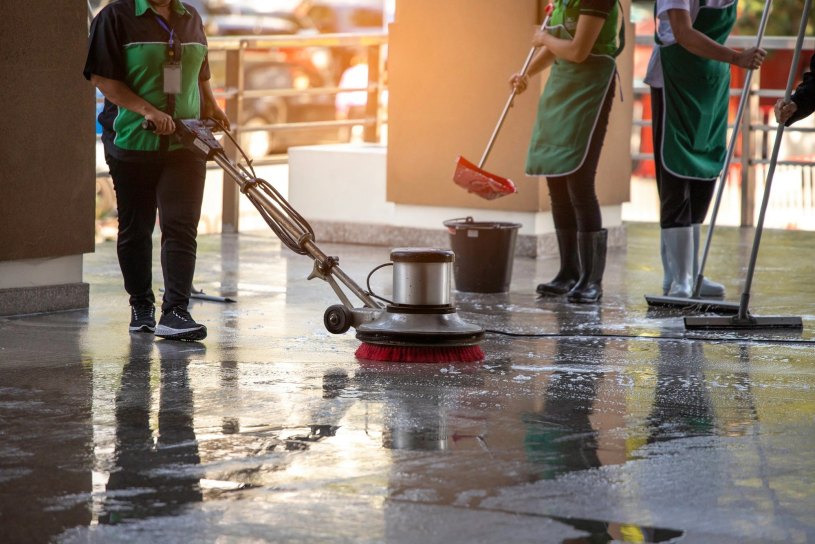
Industrial cleaning services in Singapore address a category of cleaning that commercial office cleaning cannot adequately serve. The environments are different: manufacturing floors, warehouses, food processing facilities, engineering workshops, and logistics hubs have soiling types, safety requirements, and operational constraints that office cleaning companies are neither equipped nor trained to manage. Industrial cleaning requires specialist equipment, trained personnel, compliance with safety standards, and an understanding of how cleaning integrates with the facility’s operational schedule.
What Industrial Environments Demand
Industrial facilities accumulate contaminants that require a different approach from commercial premises. Lubricants, coolants, dust from grinding and cutting operations, food-grade organic matter, chemical spills, and heavy traffic from forklifts and equipment create soiling that commercial mops and vacuum cleaners cannot address.
Industrial cleaning services Singapore facilities rely on use equipment appropriate to the scale and type of soiling, industrial scrubber-dryers for large floor areas, pressure washing for external areas and loading bays, degreaser applications for lubricant contamination, and high-reach equipment for overhead structures and ductwork. The cleaning chemicals used are formulated for industrial contamination rather than the lighter soiling of office environments.
Safety and Compliance
Industrial cleaning in Singapore operates within a framework of safety and regulatory requirements that is more demanding than commercial cleaning. The Workplace Safety and Health Act creates obligations for how cleaning in hazardous environments is conducted. In food processing facilities, food safety regulations dictate the cleaning standards that must be maintained and the verification records that must be kept.
Industrial cleaners who operate in these environments need to understand these requirements and have the training to work within them. Working at height in an industrial facility is different from cleaning an office building’s exterior. Handling industrial cleaning chemicals requires Safety Data Sheet compliance and proper personal protective equipment.
A facility manager who engages an industrial cleaning service should confirm that the provider holds the relevant licences, carries appropriate insurance, and has experience in the specific type of industrial environment being cleaned.
As the Ministry of Manpower notes in its workplace safety guidelines: “A safe working environment does not maintain itself. It is the product of deliberate, systematic effort.” Industrial cleaning is part of that systematic effort, maintaining floors free of slip hazards, removing combustible dust, and keeping equipment areas free from contamination.
Operational Integration
Industrial cleaning services in Singapore must work around facility operations rather than requiring operations to stop. Many industrial facilities run around the clock, or have narrow maintenance windows within which cleaning must occur. The cleaning service must be able to plan and execute within these constraints.
This requires communication between the cleaning company and the facility’s operations team before each cleaning session – confirming which areas are accessible, which equipment will be in operation, and what sequencing minimises disruption to production or logistics activity.
Specialist industrial cleaning companies who have planned cleaning schedules around operational requirements before can do this more effectively than generalist commercial cleaners who are unfamiliar with industrial operating patterns.
Deep Cleaning Versus Routine Maintenance
Industrial facilities need both routine maintenance cleaning and periodic deep cleaning. Routine maintenance cleaning, daily or weekly floor sweeping and mopping, toilet maintenance, common area cleaning, keeps the facility at a baseline level of hygiene. Deep cleaning addresses the accumulation that routine cleaning cannot reach: overhead ductwork, equipment bases, drainage channels, wall surfaces, and storage areas.
The interval for deep cleaning depends on the type of facility, the production process, and the regulatory requirements that apply. Food processing facilities typically deep clean on weekly or monthly cycles. Engineering workshops may schedule deep cleaning quarterly. Warehouses may clean overhead structures annually.
Peniel Cleaning provides industrial cleaning services in Singapore for manufacturing, logistics, food processing, and warehouse environments. Their team has the equipment, training, and operational flexibility to deliver industrial cleaning that meets the safety and compliance requirements of Singapore’s industrial sector.

